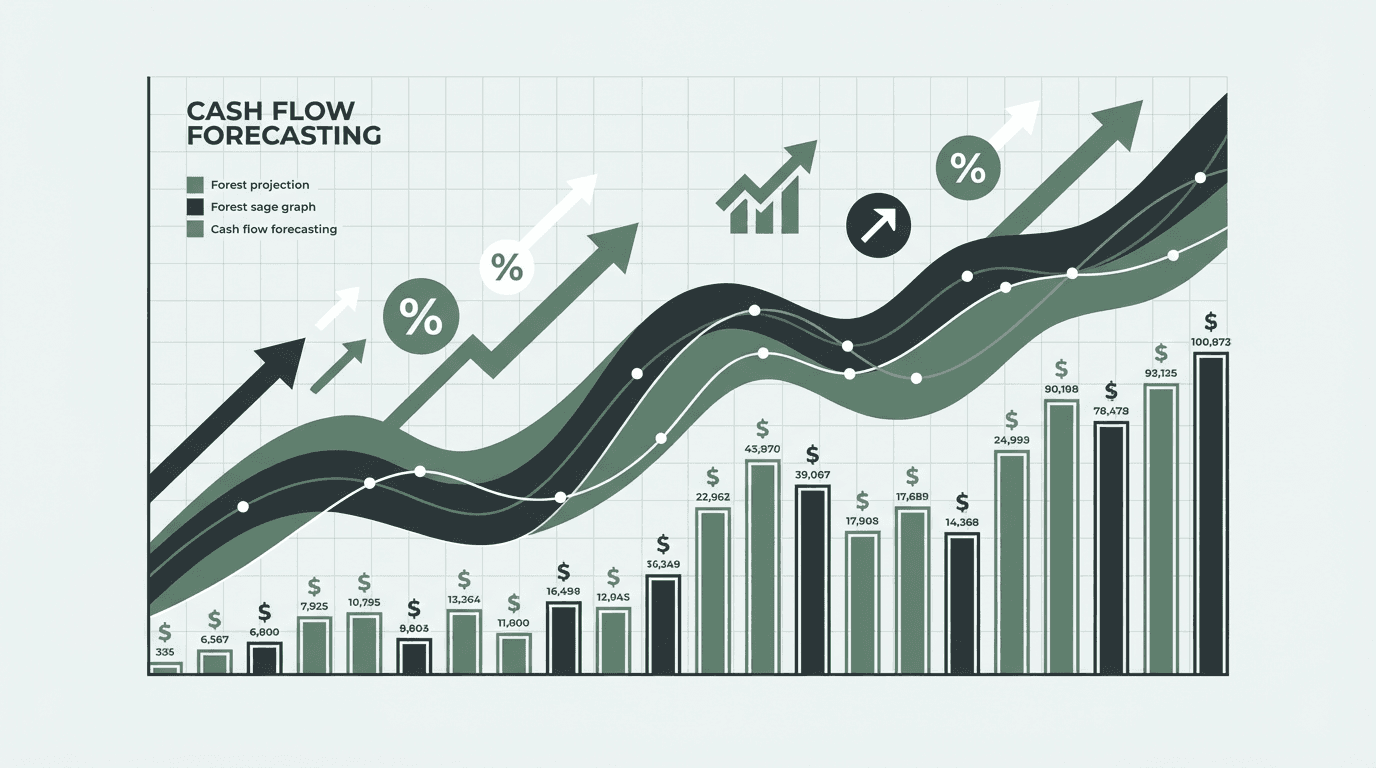
Cash flow is the lifeblood of every business — yet most small business owners admit they don’t forecast it regularly. When they do, the projections are often inaccurate, overly optimistic, or missing critical variables. Here are the three most common mistakes we see, and how to fix them.
Mistake 1: Confusing Profit with Cash Flow
This is the most dangerous misconception in small business finance. A business can be profitable on paper and still run out of cash. Why? Because profit is an accounting concept, while cash flow is about timing.
If you invoice a client $50,000 but they don’t pay for 60 days, that revenue shows on your profit and loss statement immediately — but the cash isn’t in your bank account. Meanwhile, you still need to pay wages, rent, and suppliers.
The fix: Build your forecast around actual cash movements, not accrual-based revenue. Track when money physically enters and leaves your bank account, not when it’s earned or owed.
Mistake 2: Ignoring Seasonality
Many businesses have predictable seasonal patterns — retail peaks at Christmas, construction slows in winter, tourism businesses fluctuate with school holidays. Yet most forecasts use a simple average across all months.
The fix: Analyse at least two years of historical bank data to identify seasonal patterns. Build these fluctuations into your forecast so you can plan ahead for lean months. At Alpine Accounts, we use AI-powered tools that automatically detect these patterns and incorporate them into rolling forecasts.
Mistake 3: Forecasting Only Revenue (Forgetting Outflows)
It’s human nature to focus on the exciting part — sales projections and revenue growth. But the outflow side of the equation is equally important and often more predictable. Fixed costs like rent, insurance, subscriptions, and loan repayments are known quantities. Variable costs like wages, materials, and shipping can be estimated as a percentage of revenue.
The fix: Start with your fixed outflows — these are your baseline. Then layer in variable costs based on your revenue assumptions. Finally, add your revenue forecast. This “outflows first” approach forces a more conservative and realistic picture.
A Simple Forecasting Framework
Here’s a practical approach that works for most small businesses:
At Alpine Accounts, cash flow forecasting is a core part of our advisory service. We build rolling 13-week forecasts for our clients using real-time data from Xero, updated automatically as transactions flow through. No spreadsheets, no guesswork. If your cash flow feels unpredictable, let’s fix that — book a free consultation today.